How we make carbon accounting simple …
We help you understand your carbon footprint without complicated language or confusing reports. Our process is clear, practical and designed for busy businesses.
1. Understand your emissions
Get a clear picture of where your emissions come from and what matters most to your business.

2. Create a simple plan
We'll create a practical plan together, with realistic actions your business can take.
3. Take action
Understand your results, meet requirements and make informed decisions.
The Business Benefits of a Carbon Reduction Plan
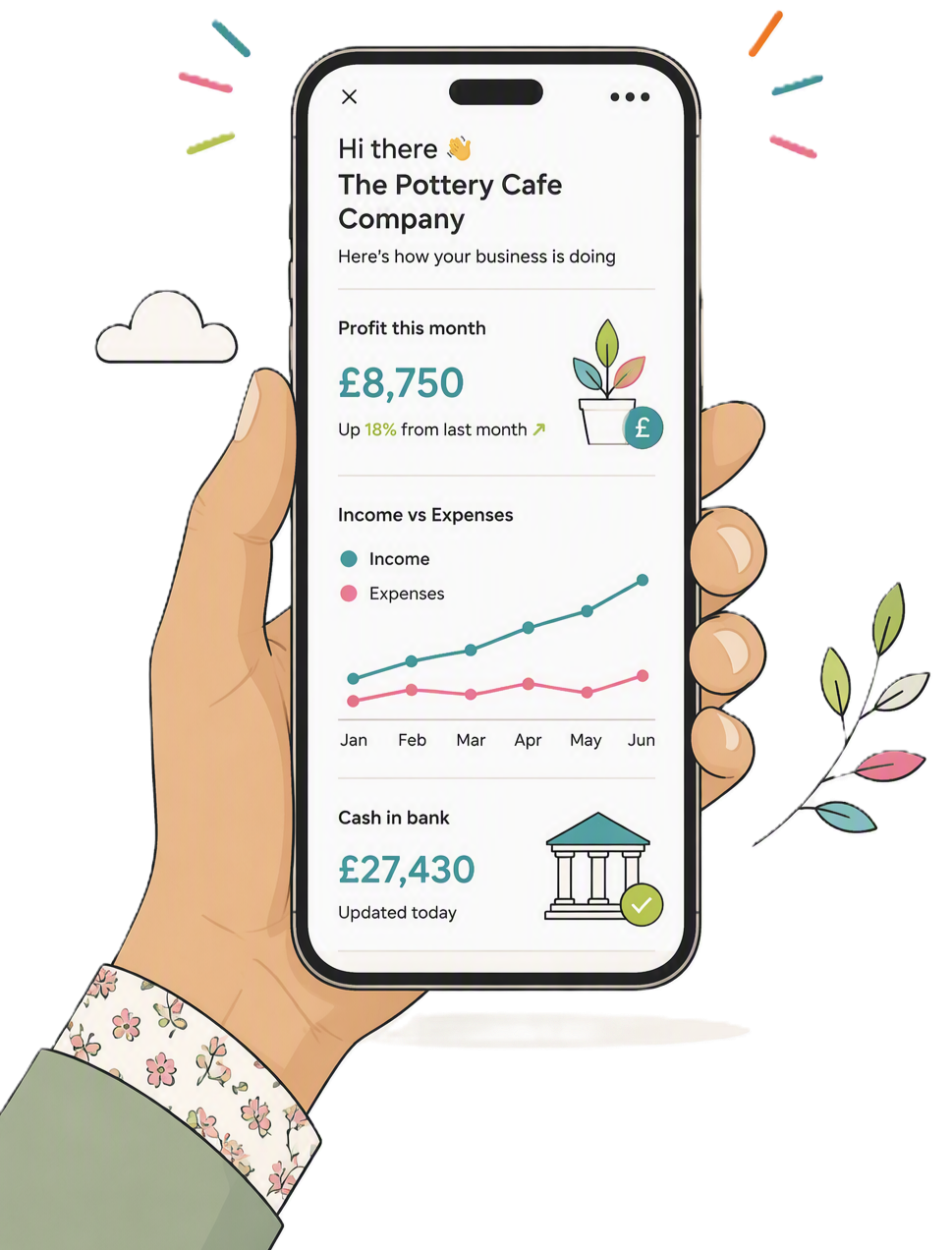
Make smarter decisions
Save money and lower your impact on the planet

Enagage your Team
Actionable steps, working together
Attract customers and win contracts

Win more business
Environmental requirements are changing - you will be ready

Stay ahead of regulation
Strengthen credibility and build partnerships

Build Trust
Credibility with banks, investors and funding partners.
Improve access to funding
Sustainability terms explained simply
New to ESG and carbon reporting? Click any of the terms for a simple explanation
-
Description textThis is the big umbrella term you'll hear everywhere. It's basically a way of measuring how a business is doing beyond just profit, looking at its environmental impact, how it treats people (staff, customers, communities), and how it's run behind the scenes (leadership, ethics, transparency). goes here
-
Similar idea to ESG, but a bit older and broader. It's about a business taking responsibility for its impact on society and the environment, things like charity work, ethical sourcing, or reducing waste. Think of it as the umbrella that came before ESG became the more formal, measurable version.
-
This means balancing out the greenhouse gases a business puts into the atmosphere with the amount it removes or offsets, so the overall impact is zero. Lots of businesses are setting "net zero by [year]" targets, most commonly 2050, though many are aiming earlier.
-
This is simply the total amount of greenhouse gases (mainly carbon dioxide) that a business, product, or activity produces. It's usually measured in tonnes of CO2 equivalent (CO2e) and is the starting point for most sustainability plans, since you can't reduce what you haven't measured.
-
These are the three categories used to measure a business's carbon footprint:
Scope 1: Direct emissions from things you own or control, like company vehicles or gas boilers.
Scope 2: Indirect emissions from the energy you buy, like electricity.
Scope 3: Everything else in your value chain, supplier emissions, business travel, even how customers use your product. This is usually the biggest and trickiest one to measure.
-
The gases that trap heat in the atmosphere and contribute to climate change, carbon dioxide, methane, and nitrous oxide being the main culprits. When people talk about "GHG emissions" or "GHG reporting", this is what they mean.
-
A UK requirement for larger businesses to report their energy use and carbon emissions each year as part of their annual accounts. If your business meets certain size thresholds, this one isn't optional.
-
An EU rule requiring larger companies to report on sustainability in more detail, covering environmental, social and governance topics. Even UK businesses can be affected if they have EU operations or are part of a supply chain for an EU company.
-
A certification given to businesses that meet high standards of social and environmental performance, accountability, and transparency. It's become a well recognised badge of honour for businesses genuinely trying to do things properly.
-
One of the most widely used frameworks for sustainability reporting. If a business says its sustainability report follows "GRI standards", it means they're using this internationally recognised structure.
-
An internationally recognised standard for environmental management systems. Getting certified shows a business has a proper structured approach to managing and reducing its environmental impact, rather than just good intentions.
-
This is when a business compensates for its emissions by funding projects elsewhere that reduce or remove carbon, like tree planting or renewable energy schemes. It's a useful tool, but it works best alongside genuine emission reductions, not instead of them.
Take the first step towards lowering your carbon footprint.
Let's explore how your business can stand out through measurable improvements.